


Science, yes. – Our scientific approach to food supplements
But in the service of real life.
Most brands talk about science. So do we, but the question we're interested in is different: is science enough on its own? How do we make sure that what it demonstrates truly translates into products that respect it and into lasting consumption habits?
Too often, there's a gap between theory and practice. ODAKARE's founder did everything she could to understand this phenomenon and find solutions. Mastering synergies, along with the boldness and courage of nearly 18 months of exploratory field research, paved the way to concrete answers.

Hands-on expertise
What science demonstrates, experience knows how to translate.
Science lays the foundations; hands-on experience does the rest. It refines dosages, settles trade-offs and builds on what studies demonstrate. And above all, there are real users, in real life, won over by the simplicity and effectiveness of the routine. Their feedback, as much as the literature, guides our choices.
35+ YEARS
of combined experience in nutrition & micronutrition — Anne-Laure, Ludovic, Sophie
REAL LIFE
feedback from users won over by the simplicity & effectiveness of the routine
Our experts & partners

Sophie Cambron
Cenatho-certified naturopath - Founder

Anne-Laure de Hults
CFNA-certified nutritional therapist and UDNF member · Co-founder

Ludovic Rondini
PhD in nutrition · Co-founder

Maxime Servaes
Doctor · Aesthetic & plastic surgeon

Pauline Brouez
Sports dietitian and nutritionist
We formulate everything ourselves, from start to finish
No off-the-shelf formulas. Every product is designed, dosed and refined in-house: selecting forms chosen notably for their bioavailability (magnesium malate, methylated B vitamins, iron bisglycinate…), deciding on dosages and factoring in regulatory requirements right from the formulation stage.
We also go out to meet our producers in the field, as on this visit to an algae cultivation unit producing astaxanthin. Because a good formula also starts with a good source.


Nutrient density: common sense and science
Since the Second World War, the nutrient density of our diet has fallen sharply. It's a finding documented by several studies, without any dramatisation: our plates no longer provide quite the same nutrient profile as they used to. Several major changes explain why.


Sugar everywhere
Added sugars have taken up an increasing share, particularly in drinks and processed foods. These calories can quickly raise blood sugar when consumed as sugary drinks and, when they make up a large part of the diet, they tend to displace foods that are naturally richer in vitamins, minerals and fibre. The result: plenty of available energy, but not always the same nutrient density. Area of research
Pesticides in agriculture
Over recent decades, intensive pesticide use and intensive farming practices have helped deplete soil biodiversity and microbial life. This degradation can disrupt soil fertility and nutrient balance. In this context, preserving the nutritional quality of our food becomes a major challenge. Food supplements can then provide targeted support to fill certain gaps, alongside a balanced diet. Area of research
Livestock farming & selection
Livestock fed on maize meal rather than grass, farmed fish: the fat profile changes. And the fruit varieties that have been favoured, sweeter and less fibrous because they grow faster, are the result of deliberate selection. Area of research
An omega-6/omega-3 ratio that has soared
Our ancestors consumed a ratio close to 1:1. The modern Western diet now reaches 15:1 to 20:1 — an imbalance research associates with a more inflammatory profile. Area of research
Wild vs farmed
Wild salmon has a far more favourable fat profile than farmed fish; an apple from years gone by was richer in micronutrients than many of today's standardised fruits.
A more demanding context
A hectic pace of life, chronic stress, environmental exposure: for many people, regular micronutrient support has become a foundation rather than an occasional luxury.
References: Simopoulos AP, omega-6/omega-3 ratio & chronic disease (2008) · evolutionary aspects (2003).

Natural fibres, brought back in line with nature
Our fruit has changed: bred to be sweeter, often less fibrous. Today's apple no longer has quite the same profile as yesterday's. The answer isn't to go against nature, but to rely on the best it has to offer.
Thanks to scientific progress that respects nature, we now know how to extract particularly valuable natural fibres that are FODMAP-free and well tolerated. One example is the inavea™ Original acacia fibre from Nexira that we use in Creagen+: a wild-harvested acacia gum (Acacia senegal), rich in soluble fibre, with a near-zero glycaemic index and prebiotic properties, from a fair-trade (Fair for Life), environmentally friendly supply chain.
Nexira — inavea™ Original · sustainable sourcing. Area of research
What science says about our formulas
The everyday routine, plus two targeted courses for times when your body needs more. Choose a tab to find out more.
OK360™ RITUAL: YOUR NEEDS COVERED AT 360°
A true single "all-in-one" was impossible: some actives can't coexist in a single dose. Science itself requires a separation. Two complementary steps, not one more.

Water
CREAGEN+
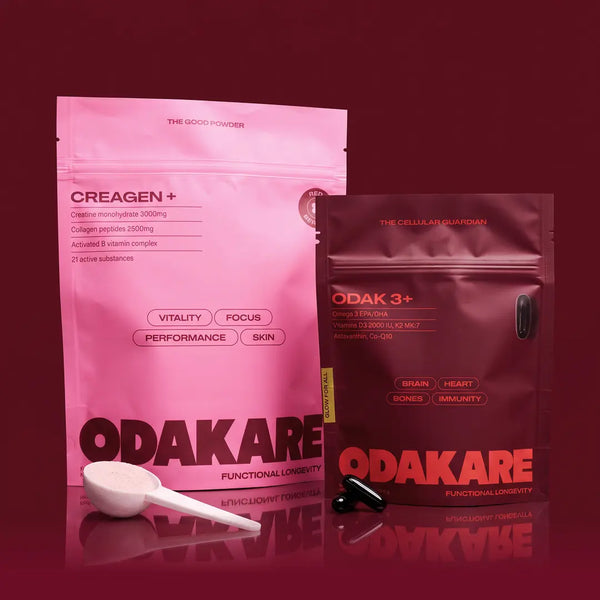
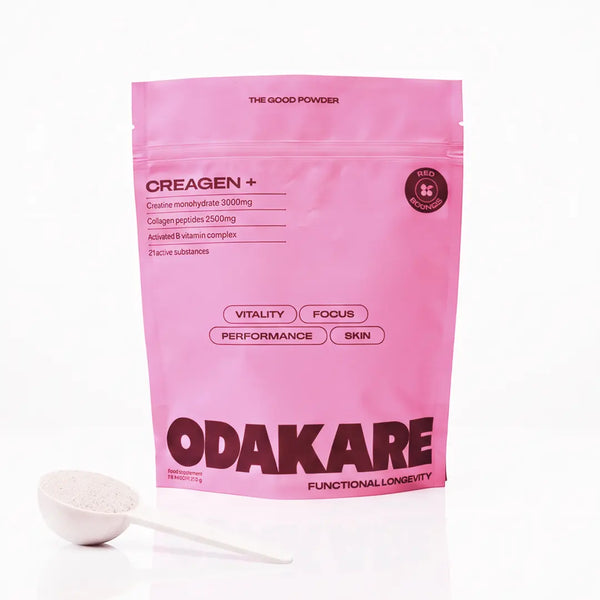
A powder bringing together 21 complementary actives, including the water-soluble actives. Creagen+ contains creatine, collagen, B vitamins and vitamin C, magnesium and more… To support vitality, performance and wellbeing every day.
Oil
ODAK 3+
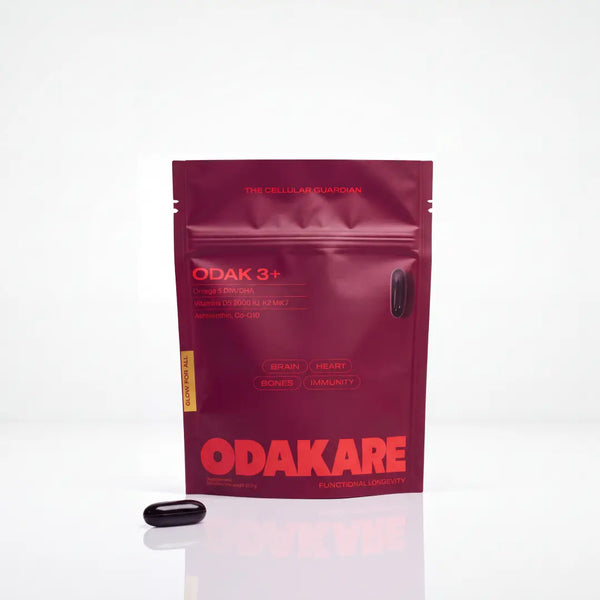
A capsule with fat-soluble actives: omega-3, CoQ10, astaxanthin, vitamins D, E, K… For deep, long-lasting protection.
Water and oil don't carry the same nutrients; by separating them, we respect the way the body absorbs them.
IRON FORTE ENZYME+
An iron designed as a response to the major stages of a woman's life. Iron bisglycinate (Ferrochel®), known to be well absorbed and gentle on digestion, combined with digestive enzymes (bromelain, papain), organic spirulina and rosehip (Rosa canina), naturally rich in vitamin C — clean, traceable, undiluted.
Iron contributes to the reduction of tiredness and fatigue, to normal oxygen transport in the body and to the normal formation of red blood cells and haemoglobin. EFSA-authorised
Discover Iron Forte Enzyme+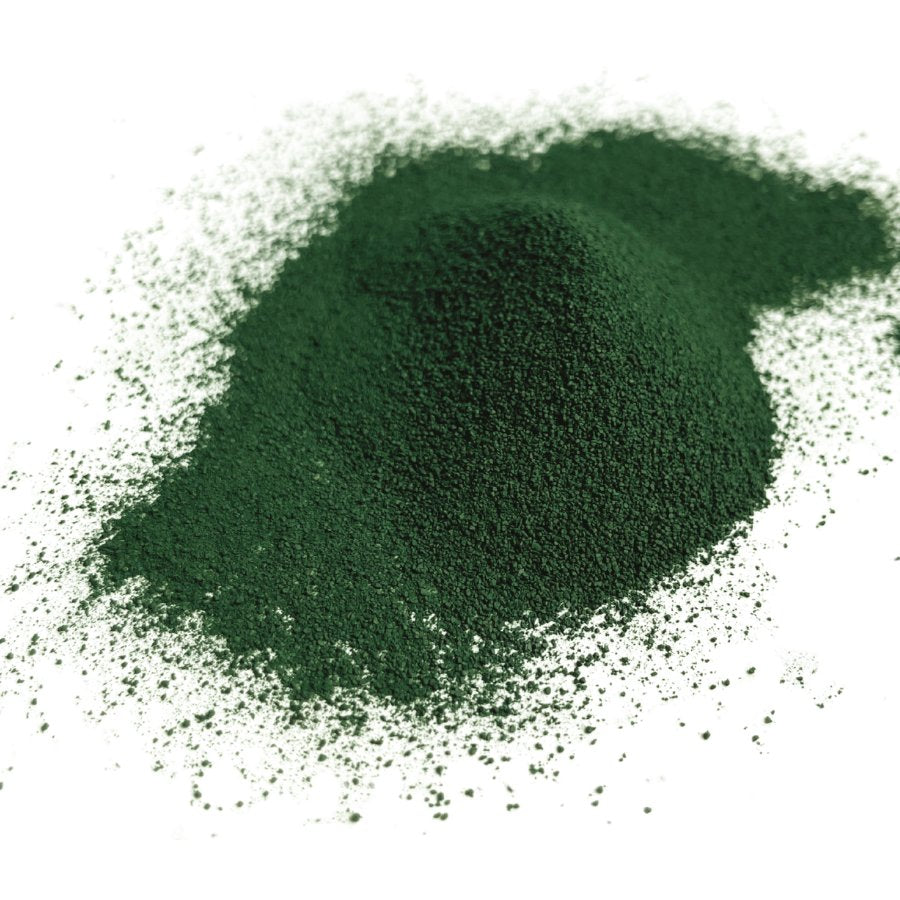
References: Vitamin C & iron absorption (Hallberg, 1986) · Bromelain — review (2012).
CORTIRELAX 4+
When life asks more of us, whether it's a change of direction, deep fatigue or a period of sadness, Cortirelax 4+ provides support, with magnesium bisglycinate and a less common combination: ashwagandha KSM-66®.
Magnesium contributes to the reduction of tiredness and fatigue, to the normal functioning of the nervous system and to normal psychological function. EFSA-authorised
Discover Cortirelax 4+References: EFSA — magnesium (2010) · Ashwagandha & stress (2019).
Smart synergies, not accumulation
Take ODAK 3+: nine fat-soluble actives combined in a single capsule. That's no coincidence. Brought together in a high-quality fish oil rich in omega-3, they are absorbed together and support one another to maximise their effects, whereas taken separately they would lose effectiveness.
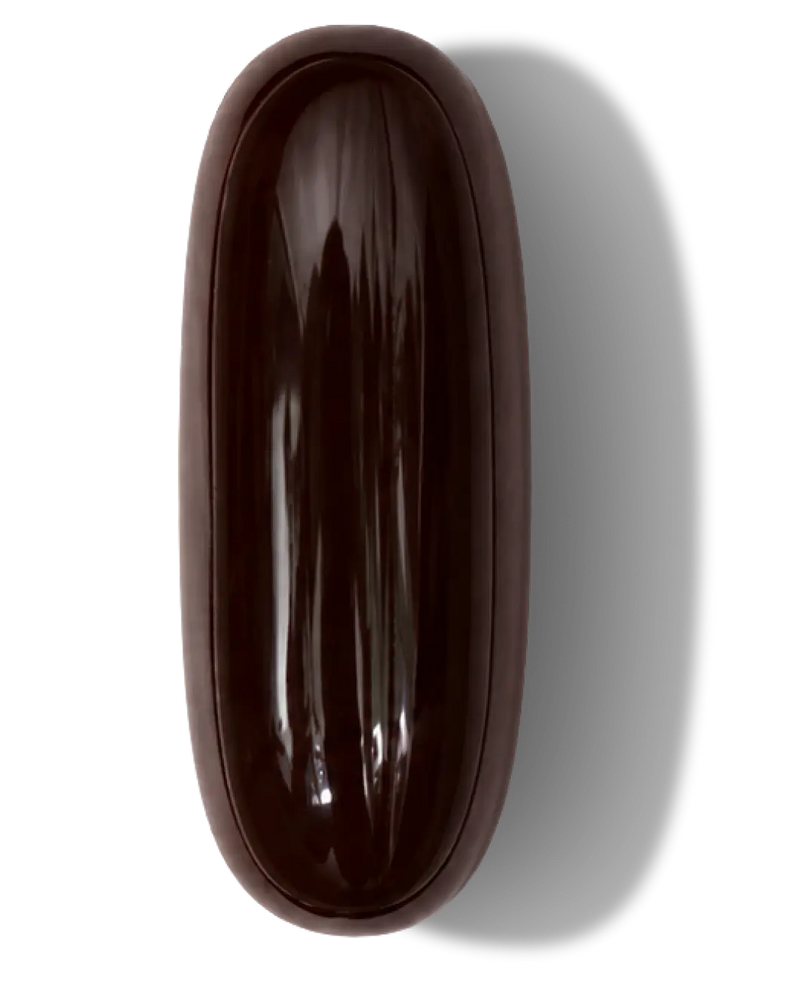
ODAK 3+
A fat-soluble capsule — the cellular guardian



Some interactions are well documented: vitamin D promotes calcium absorption, and vitamin K2 helps bind that calcium to bone; fat-soluble vitamins are better absorbed with fat, and here fish oil acts as a natural carrier for the whole formula. EFSA — D & K / bones
Our vision of longevity is informed by fundamental research, such as the work of Dr Eric Verdin (Buck Institute) on NAD+, sirtuins and cellular metabolism. A background inspiration, not a product promise. Fundamental research
Verdin — β-hydroxybutyrate, Science (2013) · NAD+ in aging, Science (2015)
Intermittent fasting with reduced calorie intake
Fasting is probably one of the oldest practices associated with balance and health. Research is now taking a close interest in intermittent fasting and its different forms, especially when it's part of an overall healthy lifestyle.
Our formulas were designed to fit into this approach, with a very low calorie intake. They are therefore compatible with a form of modified intermittent fasting, while providing targeted nutrients: vitamins, minerals, amino acids and other actives selected for their nutritional value.
The goal? To stay as close as possible to a fasting period while giving the body certain essential nutrients, in a simple routine that's easy to fit into everyday life.


What's proven, not what's trendy
We favour actives with a solid scientific foundation and dosages that live up to it, and we rule out anything that has no place in our promise.
What we favour
- Actives with an established scientific foundation (EFSA claims)
- The most bioavailable forms (bisglycinate, malate, methylated B vitamins)
- Truly effective dosages, with no risk of overdose
- Documented synergies, not accumulation
- Full commitment to traceability and supply chain quality
- Production by ODAKARE and agile SMEs in Belgium, France and Spain
What we rule out
- "Trendy" ingredients without evidence to match
- Multiplying poorly absorbed products that overload the body
- "Token" dosages, too low to have any effect
- Claims that science doesn't support
- Opaque or diluted supply chains

Push science as far as it goes, then bring it back to a human scale.
Not promising miracles, but offering a serious, coherent and documented routine whose benefits build up over time, and, alongside it, two targeted courses for times when your body needs more.
Not to cure, not to replace: to help. A supplement never replaces a varied and balanced diet: it complements it, precisely where it falls short. Take it for what it is: a food supplement, a support, a helping hand.
